How Smarter Warehouse CCTV Protects Your Bottom Line
Stock going missing, strange activity after hours, pressure from insurers, it all adds up for warehouses across Gippsland. When storage ramps up in the colder months and trucks are rolling in and out in the dark, small gaps in your security can quietly turn into big losses.
Good business CCTV systems in Gippsland do much more than try to catch someone jumping a fence. A well-planned setup supports staff safety, helps sort out damage disputes, backs up your workplace policies, and keeps insurers a bit happier too. It becomes part of how you run your shed, not just a camera on a pole.
We work in warehouses across East Gippsland and the Latrobe Valley, and we see the same patterns again and again. Cameras on the wrong angle, poor lighting, no coverage in the spots where trouble actually happens. In this article we share what warehouse operators should think about when planning, installing, and looking after CCTV in large industrial spaces, so the system quietly does its job every day.
Key CCTV Risks in Gippsland Warehouses You Can Fix
Many local sheds share similar weak points. These are not always about dramatic break-ins, they are often about everyday blind spots.
Common external problem areas include:
- Poorly lit yards and side lanes, especially with early sunsets
- Long driveways shared with other businesses or houses
- Rear roller doors facing paddocks or back roads
- Remote sheds on farms or industrial edges with no neighbours nearby
As days get shorter and conditions stay damp, more activity happens in low light. Fog, heavy cloud and wet concrete can all make cheap cameras almost useless at night. Good image quality, decent lighting and the right camera positions matter a lot more when you are watching a dark yard, not a bright office.
Inside the warehouse, the risks are often different:
- High-traffic forklift zones where staff and vehicles mix
- Racking aisles where products go missing or get damaged
- Loading docks where freight changes hands between parties
- Restricted areas like chemical stores, workshop pits or server rooms
A tailored CCTV layout helps by:
- Covering the outer fence line and key entry points so you see events before they reach the door
- Watching loading zones from several angles to check how damage happened
- Recording activity around high-risk areas to support safety rules
- Linking with existing alarms so camera views match your sensor zones
When cameras are placed to match your real risks, they support safer work habits, clearer investigations and better control of who goes where.
Designing CCTV That Actually Works in Large Sheds
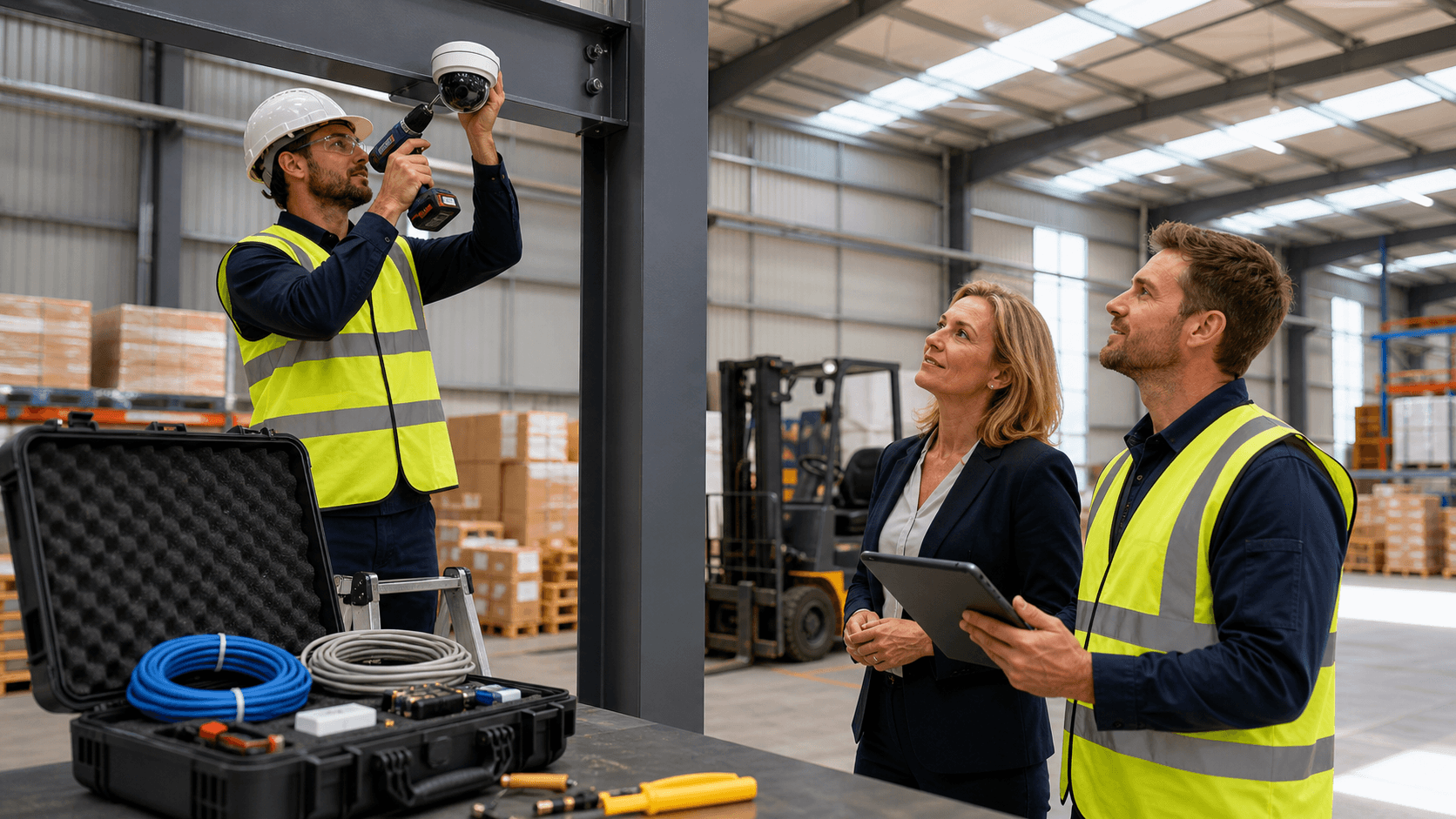
Warehouses are tougher on CCTV gear than most offices or shops. You are dealing with high ceilings, dust, cold air rolling through open doors, metal racking that blocks signals and long distances from one end of an aisle to the other.
That is why planning the right mix of camera types is so important:
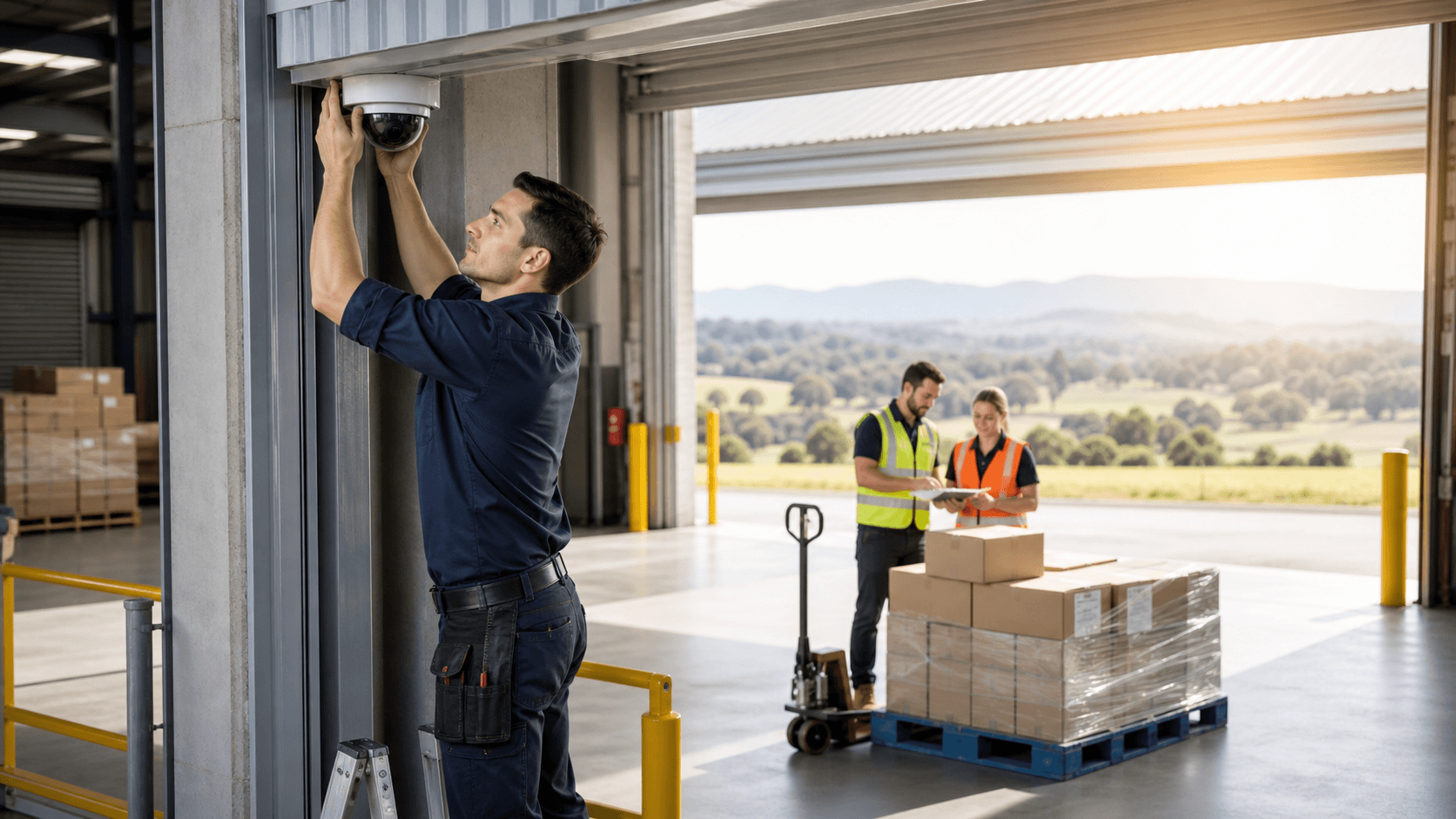
- Fixed cameras for set views like entrances, gates and loading bays
- PTZ (pan tilt zoom) cameras for yards or large open areas that need flexible coverage
- Wide-angle cameras for dock areas where you want to see people, forklifts and vehicles together
- Higher resolution cameras for long aisles or picking zones where details matter
A few practical design points make a big difference:
- Mounting heights high enough to avoid forklift damage, but low enough for a clear, useful image
- Lenses chosen to suit long straight aisles, so faces and labels are readable
- Careful placement to reduce glare from skylights, high-bay lights and open roller doors
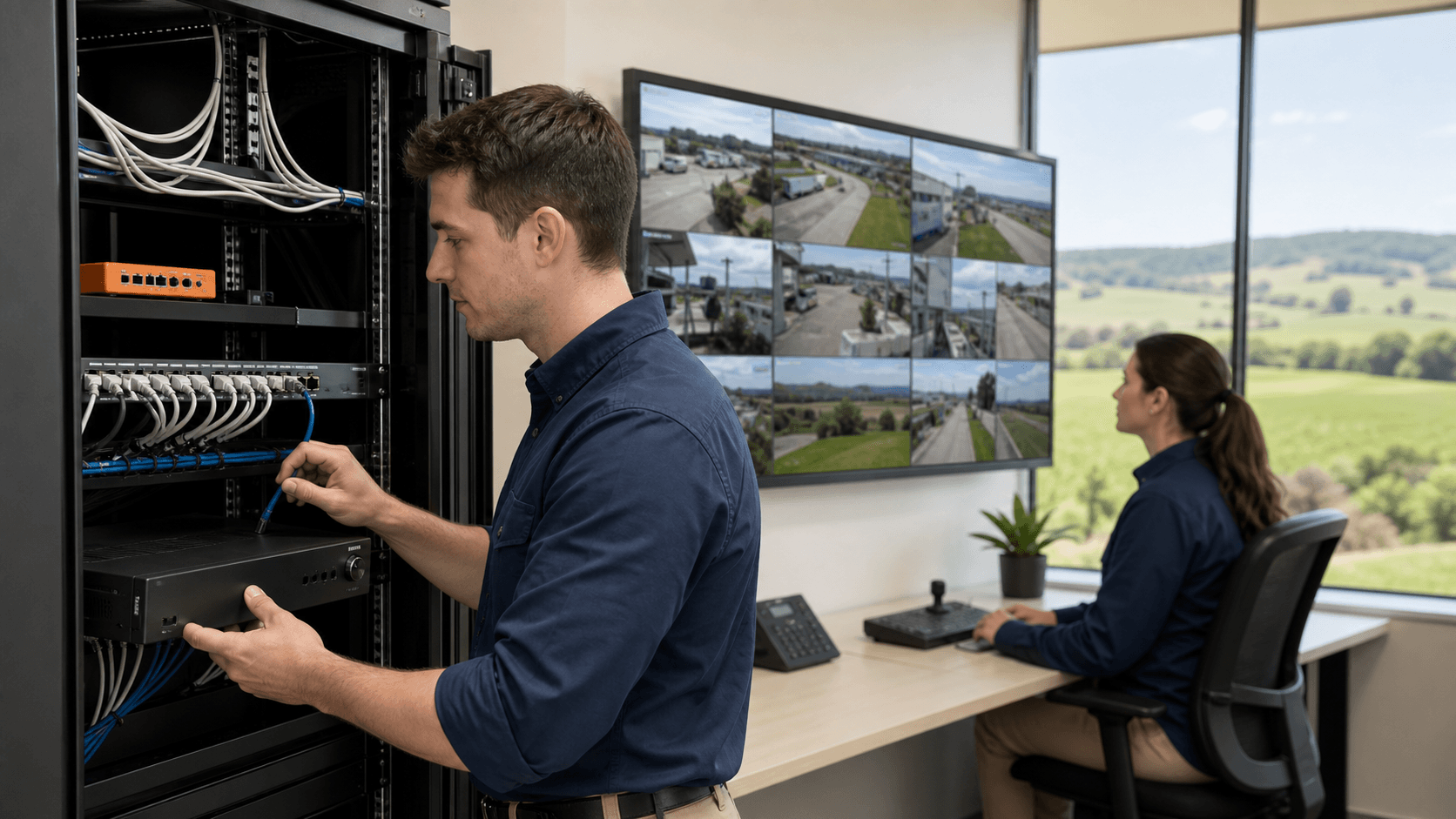
Behind the scenes, the "boring" parts of the system often decide how reliable it is. Solid data cabling, a secure network setup and recording hardware matched to the number of cameras and quality settings all help keep footage recording when you need it. A local provider who understands warehouse layouts and regional conditions can design for long-term stability, not just a quick install.
Smart Features That Make Business CCTV Work Harder
Modern business CCTV systems in Gippsland can do more than simply record everything and hope you find the right moment later. Smart features save time and help you act quickly when something odd happens.
Useful tools include:
- Motion detection in quiet areas outside normal hours
- Line crossing alerts on gates, doors or internal boundaries
- Region alerts around high-risk machinery or storage zones
- Smart search that lets you jump to "movement near this roller door" instead of scrolling for ages
Remote viewing is another big win for warehouse owners' and managers. From a phone, tablet or laptop, you can:
- Check an after-hours delivery arrived safely
- Look for storm damage after high winds or heavy rain
- See what triggered an alarm before sending someone out
- Keep an eye on multiple sites without leaving home or the office
CCTV can also be part of a wider security setup. When cameras work alongside alarm systems, access control and Wi-Fi networks, you get a clearer picture of who was where, when, and how they got in. Storage planning matters too. The number of cameras, resolution and frame rate all affect how long footage is kept. Insurance policies or internal policies may expect a certain retention period, so it pays to plan this properly from the start.
Connectivity and Starlink for Remote Warehouse Sites
Regional connectivity is one of the big challenges for business CCTV systems in Gippsland. Many sheds sit on farm blocks, industrial outskirts or along back roads where fixed internet is limited or patchy.
In these locations, pairing CCTV with Starlink and well-designed Wi-Fi can keep things running smoothly. With a suitable setup you can:
- View cameras from town even when the shed is out of NBN reach
- Send key footage off-site so it is safe if equipment on-site is damaged
- Link several small depots back to a central office for monitoring
For example, a rural machinery shed might have cameras on gates, fuel tanks and workshop areas. With satellite internet feeding a stable Wi-Fi network, those feeds can be viewed from a main office in a nearby town, and important clips can be backed up away from the site.
Getting CCTV, internet and business IT systems working together safely is not a simple plug-in job. Professional installation and ongoing IT support helps keep remote access secure, avoid network bottlenecks and ensure cameras keep recording even during power or connection hiccups.
Turn Your Warehouse Cameras Into a Business Asset
When CCTV is planned around your warehouse layout and risks, it stops feeling like a grudge purchase and starts acting like another useful tool. It can cut down on stock loss, shorten incident investigations, clear up "who did what" questions and support a safer, more organised workplace.
Before the next busy storage or freight period, it is worth taking a fresh look at your current setup. Walk the site and ask:
- Are there coverage gaps in aisles, docks or yards?
- Is night-time footage clear enough to identify people and vehicles?
- Are key events easy to find, or are you scrubbing through hours of video?
- Is your internet connection strong enough to support remote viewing and backups?
As a locally owned security and IT company, EastTech Solutions works across East Gippsland and the Latrobe Valley on CCTV, alarms, data cabling, Wi-Fi, Starlink installation and IT support. Bringing these pieces together into one plan helps your warehouse security stay reliable, practical and ready to support your business every day.
Get Started With Your Project Today
If you are ready to upgrade security at your premises, our team can design and install tailored business CCTV systems in Gippsland that suit the way you work. At EastTech Solutions, we focus on reliable coverage, clear images and easy day-to-day use so your staff can get on with their jobs. Reach out to our team to talk through your site, budget and timelines, or contact us to book a consultation.