Rural Starlink Setup in Gippsland: Owner's Guide
Slow, patchy internet is more than a small annoyance when you live on a rural property. It can interrupt work, cut out video calls, stop security cameras from loading, and turn simple streaming into a buffering mess, especially when the weather turns rough or everyone jumps online after dark.
If you are on NBN fixed wireless, older satellite, or a shaky 4G connection across East Gippsland or the Latrobe Valley, you have probably felt this frustration for a long time. Starlink offers a different approach, and when it is set up properly on a rural block, it can bring a smoother, more reliable connection to homes, farms, and regional businesses that rely on being online every day.
Faster, More Reliable Internet for Rural Properties
Starlink is a satellite internet service from SpaceX. It uses many small satellites in low Earth orbit to send and receive data, instead of a few large satellites much higher up. For you, that means faster speeds and lower delay than older satellite systems.
For rural and semi-rural properties, this can mean:
- Stronger support for video calls and remote work
- Smoother streaming in the evenings
- More reliable access for cloud apps and online tools
- Better support for modern security systems that need constant internet
Across East Gippsland and the Latrobe Valley, we see common issues like:
- Long distances to fixed wireless towers
- Hilly terrain blocking signal
- Thick tree lines around homes and sheds
- Old phone lines that struggle with modern use
A well-planned Starlink setup can work around many of these issues, as long as the dish has a clear view of the sky and the network inside the property is designed the right way. As a local security and IT provider, we work with these conditions every day and understand how they affect rural connections.
How Starlink Performs in Gippsland Conditions
On most rural properties, Starlink can deliver quicker downloads and uploads than older satellite options and a more consistent experience than many long-distance wireless links. Latency, or delay, is usually much lower than traditional satellite internet, which makes a big difference to video calls, cloud software, and online gaming.
Compared to common rural options like 4G and fixed wireless, many property owners notice:
- Smoother streaming on multiple TVs or devices
- Fewer dropouts during video meetings
- Faster uploads for large files and backups
- More stable speeds at busy times of day
Gippsland weather can be a real test for any internet service. Heavy rain, thick fog, winter frosts, and strong winds are all part of life here. Starlink is designed to deal with snow and ice on the dish, and light to moderate rain is usually not a problem. Very heavy rain or storms can cause short slowdowns or brief interruptions, but in practice, most people still find it more stable than older satellite options.
Hills and trees are a bigger concern. Starlink dishes need a clear view of the sky, mainly to the south in our part of the world. In steep gullies, dense bush, or heavily treed driveways, signal can be blocked or weakened. In these areas, a professional site check can help you avoid putting the dish in a spot that will cause constant dropouts.
Planning Starlink Installation in Gippsland
Before ordering Starlink, it helps to think about where the dish might go on your property. A bit of planning at this stage can save a lot of frustration later.
Key site factors include:
- Clear view of the sky, especially to the south
- Roof pitch and height of the main dwelling
- Position of tall trees, windbreaks, and shelter belts
- Nearby sheds, silos, or tanks that could block signal
- Distance to the room where you want the main router
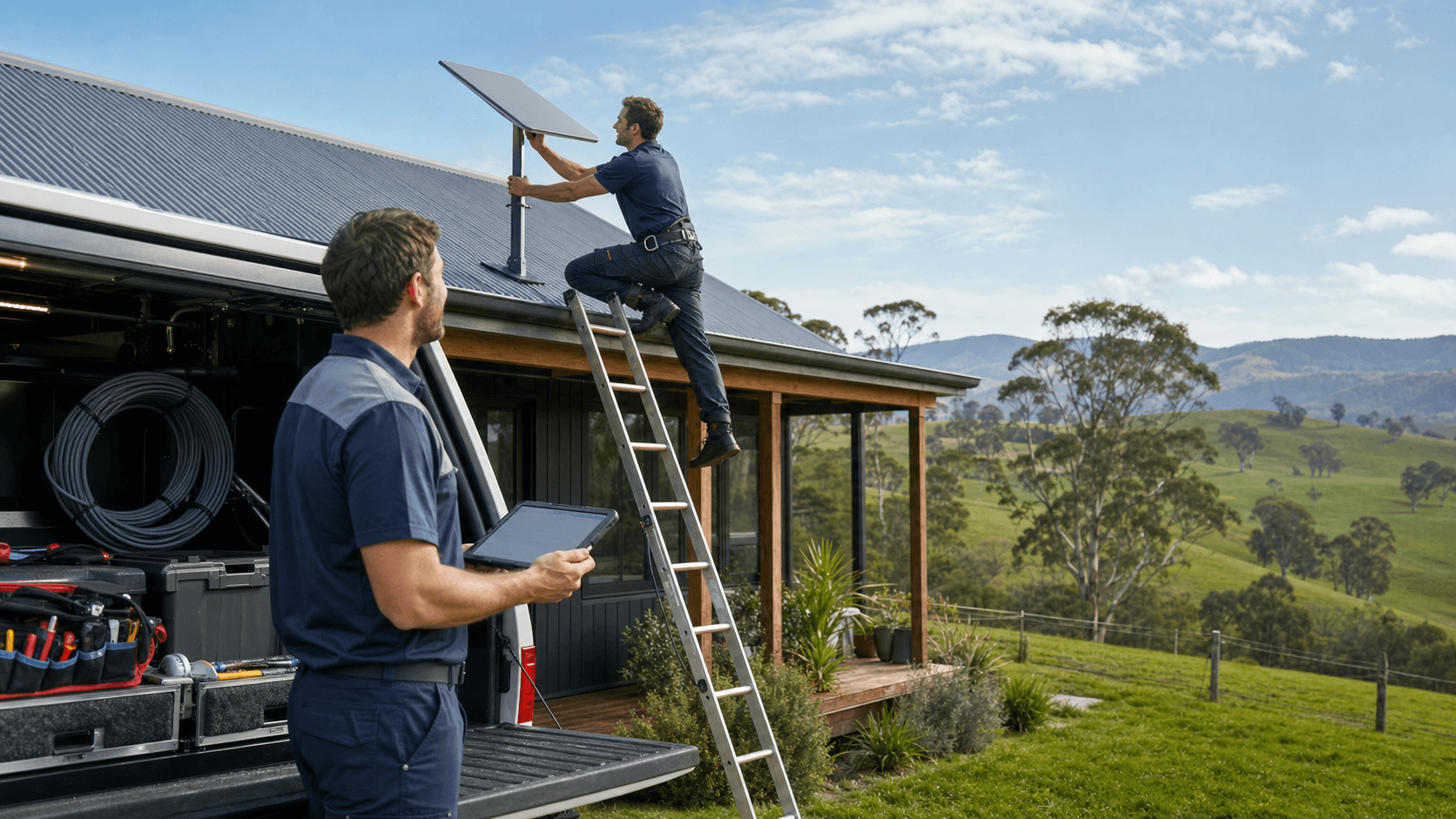
On rural blocks, the best place for the dish is not always the main house roof. Sometimes a higher shed roof or a sturdy pole can give a much clearer view of the sky. In other cases, mounting the dish carefully on the home will still work well, as long as the line of sight avoids big trees and tall structures.
Working with a local installer matters, because:
- Roof access can be tricky on older homes and farm sheds
- High winds are common and mounts need to be very secure
- Cable runs through older buildings can be complex
- Local rules and safe work practices need to be followed
Professional Starlink installation in Gippsland can reduce dropouts, help protect the dish and cables from storm damage, and make sure your system is properly placed and wired before the peak of winter demand.
Integrating Starlink with Your Home, Farm, or Business
Getting the Starlink dish mounted is only the first step. To get good internet across your whole property, you also need the right setup inside and around your buildings.
On many rural properties, the standard Wi-Fi router will not cover:
- Large homesteads with thick walls
- Shearing sheds and workshops
- Machinery sheds or dairies
- Granny flats, offices, and cabins
In these cases, a proper network design is important. We often recommend a mix of:
- Mesh Wi-Fi systems for large homes
- Wired access points in distant rooms or sheds
- Outdoor access points for yards and work areas
- Network switches to link everything together cleanly
Rural properties also have special needs that depend on a solid internet connection. With Starlink as the backbone, we can support:
- Security cameras around yards, sheds, and gates
- Alarm systems linked back to a monitoring service
- Remote gate access and intercoms
- Monitoring systems, like tank levels or equipment alerts
A well-configured router can also help when the whole household is online at once. Kids might be gaming, someone is on a video call, and another person is streaming a movie. With the right settings, traffic can be prioritised so work calls stay stable while everything else keeps running in the background.
Costs, Contracts, and Value for Rural Owners
When planning Starlink for your property, there are a few separate cost areas to think about, even if we avoid exact dollar figures.
These usually include:
- Starlink hardware package
- Ongoing monthly Starlink subscription
- Professional installation of the dish and mounts
- Internal networking equipment like routers and Wi-Fi gear
- Any extras such as roof mounts, conduits, or limited trenching for cables
It helps to compare the value against what you currently have. For many rural owners, the key questions are:
- Does it work when the weather turns bad?
- Can the business still operate if phones and power are under pressure?
- Do security systems keep recording and sending alerts?
- Is remote work actually possible, or is it a struggle every day?
Reliable internet can support better security monitoring, smoother business operations, and more flexible work options. A well-planned Starlink installation in Gippsland can improve productivity on farms, make it easier to run a small business from home, and give families more options for study and entertainment without constant dropouts.
Get Your Property Starlink Ready Before Winter Hits
Winter in Gippsland means shorter days, more time indoors, and often more pressure on your internet connection. It is far better to have your Starlink system, internal network, cameras, and alarms installed and tested before you really need them, instead of scrambling once problems show up.
For most properties, the process is simple. It usually starts with a site check, where we look at roof lines, trees, and building layout. From there, we can suggest mounting options, cable paths, and any Wi-Fi upgrades that might be needed. Once Starlink hardware arrives, professional setup and testing helps make sure everything is stable and ready for the next round of busy nights and rough weather.
At EastTech Solutions, we work across East Gippsland and the Latrobe Valley, bringing together Starlink installation, networking, CCTV, and alarms into one joined-up system. With the right plan and local support, your rural property can finally have the kind of connection that matches how you live and work today.
Get Started With Your Project Today
If you are ready to improve your internet reliability, we can organise a tailored Starlink installation in Gippsland that suits your property and budget. At EastTech Solutions, we handle everything from site assessment to setup so you can get online faster with less hassle. Reach out and let us know what you need, and we will recommend the best approach for your home or business. To book a visit or ask a question, simply contact us and we will be in touch promptly.