Stop Shoplifting Before It Starts With Smart CCTV
Small shops across Gippsland deal with a lot: quiet late nights with only one staff member on, busy weekends when it is hard to watch every aisle, and older buildings with odd corners and blind spots. When stock goes missing, it is not always clear if it was a simple mistake or deliberate theft, and that uncertainty is stressful.
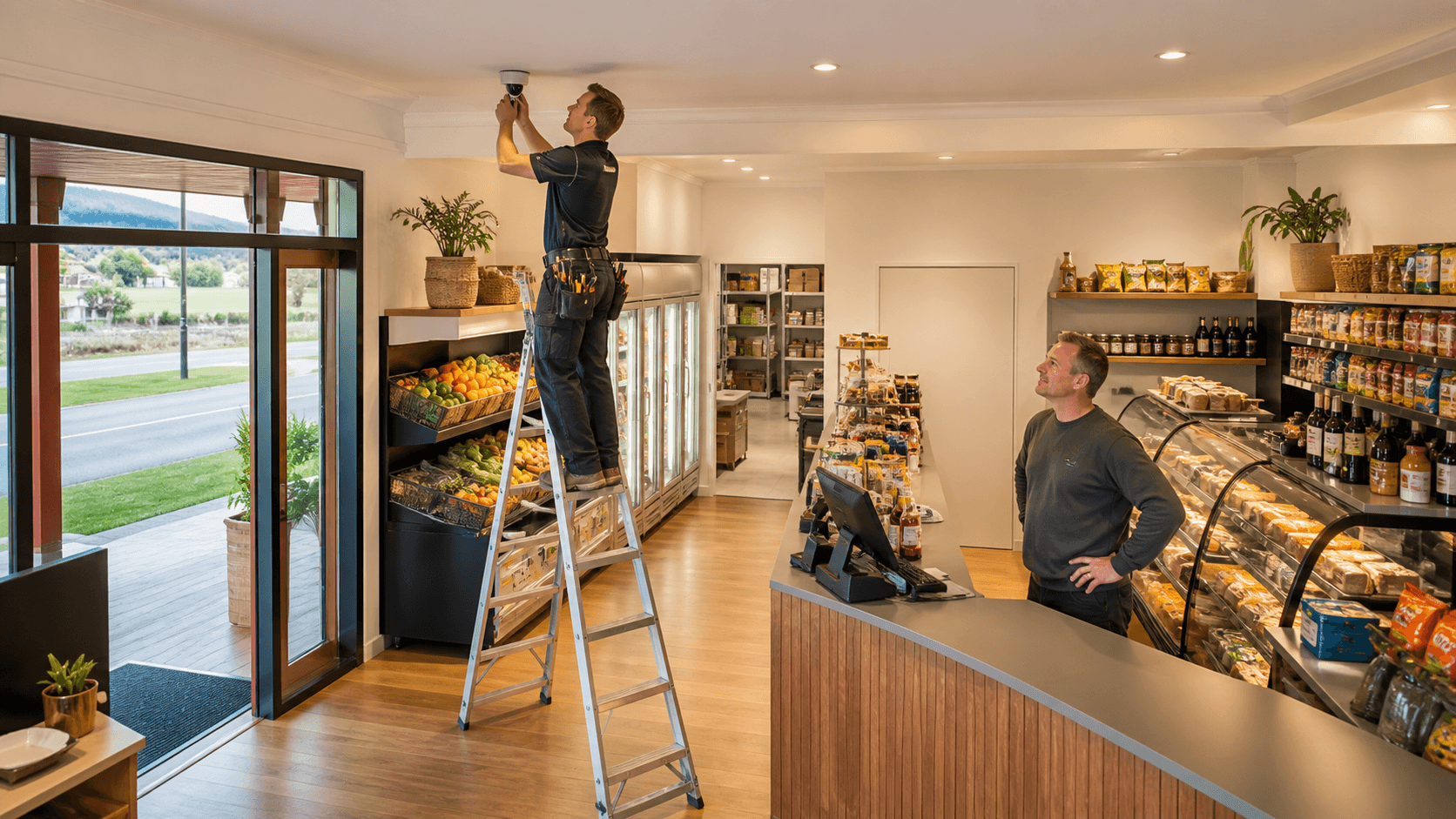
Good CCTV can take away a lot of that guesswork. The trick is not just adding more cameras; it is placing the right cameras in the right spots so they actually capture what you need. Entrances, counters, and stock rooms each need different angles and coverage to work properly.
In this article we focus on practical camera placement for small Gippsland shops. We look at how to cover your front door, till area, and back-of-house spaces in a way that helps deter theft, keeps staff safer, and gives you footage that is clear enough to be useful if something does happen.
Front Door Cameras That Capture Faces Clearly
Your entrance is where you have the best chance to get a clear shot of every person who comes in and out. If there is a problem later, that face shot is often the most important clip of footage you have.
For front door coverage, we usually recommend putting the main camera just inside the shop, not outside. This helps you deal with:
- Bright daylight at the door that can turn people into dark silhouettes
- Cold, wet weather that can affect outdoor cameras
- Reflections on glass doors and windows
Some simple placement tips that make a big difference:
- Mount the camera slightly to the side of the doorway, facing inwards, so it is not looking straight into the light from outside
- Keep it high enough to see the whole doorway, but not so high that faces are tiny dots in the frame
- Make sure signage, posters, hanging racks, and display stands do not block the line of sight
Lens choice matters too. In a small shop with a narrow entry, a wide-angle camera just inside the door is usually enough. In larger shopfronts or stores with a big open entry, a slightly narrower lens can give you sharper detail on faces. For shops with two entrances, having a camera on each door can save a lot of guesswork when you try to track who came from where.
You also need to think about privacy and compliance:
- Put clear signage at the entrance to tell customers that CCTV is in use
- Angle cameras so they only cover your shop space, not the street outside more than needed
- Make sure cameras do not point into neighbouring properties or any private staff areas
Done well, your entrance cameras help deter troublemakers and give you a clear starting point for any incident.
Counter and POS Coverage That Stands up as Evidence
If the money and high-value items are at the counter, your cameras should be too. Good counter coverage is not just about catching thieves; it also helps resolve everyday disputes and protects honest staff.
We usually look for two key views around the till:
- An overhead or high wall camera that shows the whole counter area
- A closer camera aimed at hands and transaction surfaces
The overhead view should capture:
- The cash drawer and EFTPOS terminals
- The area where products are scanned or placed
- The space where customers stand and interact with staff
The closer view helps with finer detail, such as:
- Note passing and cash handling
- Refunds and returns
- Gift card and voucher use
When footage has a clear timestamp, it can be lined up with POS data. That helps when you need to check:
- Reported cash shortages at the end of a shift
- Suspected refund or discount abuse
- Card payment disputes or chargebacks
To keep this footage actually useful, think about how you handle recordings:
- Store footage on a secure recorder in a locked area, not out on the counter
- Limit access to owners or trusted managers
- Keep recordings for long enough to cover busy trading periods and any delayed complaints
Thoughtful counter camera placement gives you a clear, fair record of what really happened during a transaction.
Stock Room and Back Door Cameras That Deter Internal Theft
A lot of loss happens out of customer view. Stock rooms, back corridors, and rear doors are common weak spots, especially when staff are unpacking deliveries or working alone after hours.
Common risks in these areas include:
- Items going missing between delivery and the shelf
- People using the back door for quick in and out access
- Doors left unlocked or propped open
- Staff-only spaces being used by unauthorised people
To manage this, we usually focus on three key camera spots:
- At the entrance to the stock room, aimed at the doorway so every person going in and out is recorded
- Covering shelves or racks where small, high-value, or easy-to-pocket items are stored
- Watching the rear door and loading area, including any spots where deliveries are dropped off
Lighting is a big factor. Many stock rooms are dim, and back doors can be very dark in the early evening, especially in winter. Options include:
- Cameras with good low-light performance or infrared
- Adding simple sensor lights near back doors and in darker corners
- Checking that existing lights are working and not blocked by stacked stock
Staff trust also matters. It helps to have clear written policies that explain:
- Where cameras are and what they cover
- Which areas are never filmed, such as bathrooms or private change areas
- How and when footage might be reviewed
That way cameras feel like part of normal business security, not secret spying.
Making Business CCTV Systems in Gippsland Work Together
The strongest business CCTV systems in Gippsland are planned so you can follow a person or event through the store in one smooth story. Entrance cameras capture faces, counter cameras show transactions, and stock room or back door cameras cover the flow of goods and staff movement.
A joined-up system lets you:
- Track a suspicious person from the front door, through the aisles, to the counter, and then out again
- Check if stock that is missing ever made it from the delivery area to the shelf
- Review an incident from multiple angles when details are unclear
Remote viewing is another helpful piece. Many owners of small shops across East Gippsland and the Latrobe Valley like being able to quickly check cameras on a phone or tablet when they are not on site. It can help you:
- Check that staff got in safely on a dark morning
- Confirm that doors are locked and lights are off at closing
- Respond faster if you get a call about a problem at the shop
Practical installation details make a big difference to reliability. In older buildings with thick walls, you might need different cable runs or wireless links to connect cameras back to the recorder. Consistent power and internet are important so recording does not cut out at the worst time.
A local specialist in business CCTV systems in Gippsland can help you think through:
- Storage options such as a recorder on site or cloud backup
- What happens if the power or internet drops
- How to add extra cameras or microphones later as the business grows
When all parts of the system work together, you get more than just video clips; you get a clear record of how your shop runs every day.
Protect Your Shop with Local CCTV Expertise
The main idea is simple: smarter placement beats more cameras. A well-aimed camera at the front door, a clear view of the counter, and sensible coverage of stock rooms and back doors can reduce blind spots and give you the detail you need if something goes wrong.
One helpful step is to walk around your shop as if you were looking for gaps. Look for blind aisles, cluttered counters, dark corners, and exposed back doors. Notice where staff cannot easily see customers, and where stock is left out of sight for too long. These notes make planning or upgrading CCTV faster and more effective.
As a locally owned, licensed security and IT provider based in Gippsland, we work with the real layouts and challenges of shops across East Gippsland and the Latrobe Valley every day. A simple pre-spring security check-up, before trade picks up again, is often enough to fine-tune camera positions and system settings so your shop is ready for the busy months ahead.
Protect Your Business With Reliable CCTV Security Today
If you are ready to improve the safety and visibility of your premises, we can design and install tailored business CCTV systems in Gippsland that suit your operations and budget. At EastTech Solutions, we work closely with you to understand your risks and recommend the right coverage, hardware and monitoring options. Get in touch with our team today via our contact page and we will help you put a practical, future-ready security solution in place.